- The Weekly D-Briefs
- Posts
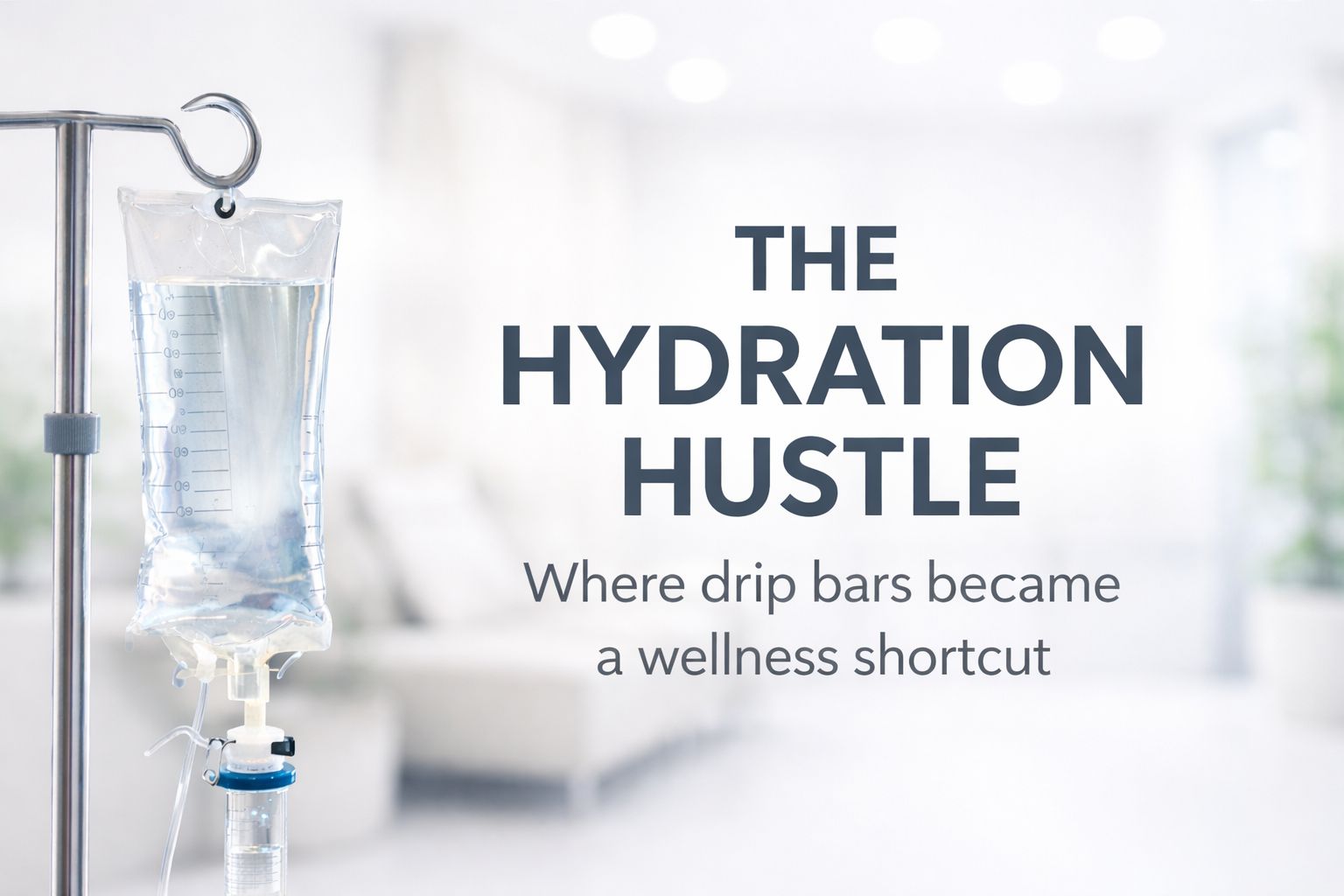
- The Hydration Hustle

Lesson: Convenience can sell the first visit, results sell the second.
IV hydration clinics didn’t take off because people got more dehydrated. They took off because they repackaged a clinical procedure into something that felt accessible, fast, and premium, a smoother alternative to getting in with your actual provider. A bag, a drip, a chair, and the promise you’ll walk out feeling better than you walked in.
My first time was before a flight. I was sick, exhausted, and looking for anything that might help. They gave me a hydration bag with immunity vitamins. I left feeling hydrated. Not transformed, not supercharged. The effect lasted maybe a day, not the three they suggested. That gap between expectation and physiology is exactly where this category lives. But demand kept climbing anyway. According to Strategic Market Research, the IV hydration therapy market is valued at $3.92B (2024) and projected to reach $7.14B by 2030, pushed by wellness spend, travel fatigue, and mobile/on-demand care. And the real unlock was simple: IV hydration became a workaround for the healthcare system. No scheduling. No waiting rooms. No insurance loops. You can book an RN or NP like you book a ride, and for many consumers, that alone is worth the visit. The rest is status. These spaces look and feel premium. Clean design, soft lighting, a menu that reads like a smoothie bar. It’s medical enough to feel legitimate, but bougie enough to feel like self-care.
Where the Real Edge Lives
IV hydration doesn’t differentiate through product; every clinic uses the same bags and ingredients. The only defensibility lies in how the service is delivered. Healthcare-adjacent brands that scaled did it through consistency and trust. Amazon acquired One Medical for $3.9B because standardized care creates leverage. Most IV chains never built that foundation. They didn’t track outcomes, dosing consistency, or any data that creates long-term power. If the category matures, the breakout operator won’t be the one with the nicest lounge; it’ll be the one that runs like a mini–care system with predictable results across locations. That’s where pricing power shows up in a space where the “product” is the same everywhere.
Three Signals That Matter
Signal 1 - Founder/Operator Takeaway
IV hydration isn’t a branding game; it’s an expectation game. Consumers may walk in for the aesthetic, but they return only if the results match the promise. If you’re building here, operational excellence becomes your differentiation long before marketing does. This category rewards clinics that act like medical providers, not spas.
Signal 2 - Consumer Insight
The customer isn’t chasing vitamins; they’re chasing faster recovery, steadier energy, and the feeling of being in control again. The moment the perceived benefit feels inconsistent, they switch providers. Loyalty isn’t earned through menu names; it’s earned through outcomes they can feel.
Signal 3 - Investor/Market Lens
For investors, the question isn’t who looks premium; it’s who can scale repeatable health outcomes safely. The strongest operators will be the ones that document protocols, show consistent results across locations, manage adverse-event processes, and retain customers at higher rates. In a space where the drip itself is interchangeable, the investable edge is reliability that can be proven, measured, and expanded. Chains that can demonstrate this with data will justify pricing power long after the novelty fades.
That’s my read on it from actually building in the CPG space.
Stick around. I’m just warming up.

Subscribe here for more → The Weekly D-Briefs (or forward this to someone building something meaningful)